Trivalent lanthanide (Ln3+)-doped inorganic nanoparticles (NPs) possess superior physicochemical features such as long-lived luminescence, large antenna-generated Stokes or anti-Stokes shifts, narrow emission bands, high resistance to photobleaching and low toxicity, and thus are regarded as a new generation of luminescent bioprobes when compared with the conventional molecular probes like organic dyes.
The research group led by Prof. CHEN Xueyuan at the Key Laboratory of Optoelectronic Materials Chemistry and Physics, Fujian Institute of Research on the Structure of Matter (FJIRSM), Chinese Academy of Sciences (CAS), has developed a series of multifunctional nano-bioprobes based on Ln3+-doped inorganic fluorides and oxides.
1. Developing the first inorganic nano-bioprobe based on Ln3+-doped NaYF4 NPs for homogeneous time-resolved fluorescence resonance energy transfer (TR-FRET) detection of avidin with a detection limit of 4.8 nM (J. Am. Chem. Soc.2012, 134, 1323).
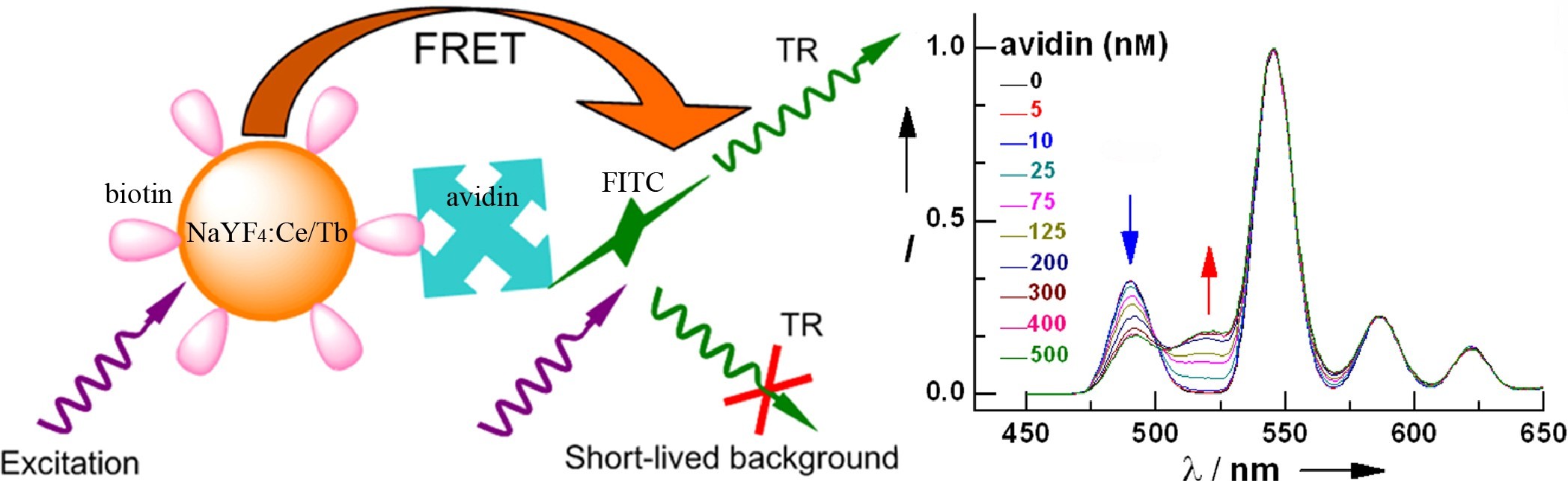
Homogeneous TR-FRET detection of avidin by using Ln3+-doped NaYF4 nano-bioprobes (Image by Prof. CHEN Xueyuan’s group)
2. Developing the first magnetic/optical multimodal nano-bioprobes based on Ln3+-doped KGdF4 NPs for homogeneous TR-FRET biodetection and magnetic resonance imaging (Angew. Chem. Int. Ed.2011, 50, 6306).
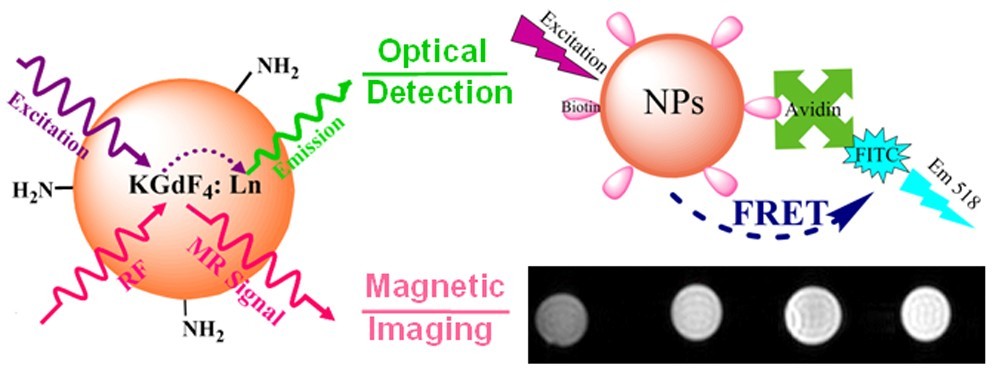
Magnetic/optical multimodal bioprobes based on KGdF4:Ln3+ NPs (Image by Prof. CHEN Xueyuan’s group)
3. Fabricating a new inorganic oxide bioprobe based on sub-5 nm tetragonal ZrO2:Ln3+ NPs that could be used for sensitive detection of avidin and targeted imaging of human lung cancer cell (J. Am. Chem. Soc.,2012,134, 15083).
4. Developing a unique strategy to fabricate sub-10 nm CaF2:Ln3+ NPs as sensitive TR-FRET bioprobes for the detection of the tumor marker soluble uPAR (suPAR, an important tumor marker over-expressed in a variety of cancer cells) with a detection limit down to 328 pM, which is comparable to the suPAR level in the serum of cancer patients (Angew. Chem. Int. Ed.2013,52, 6671).
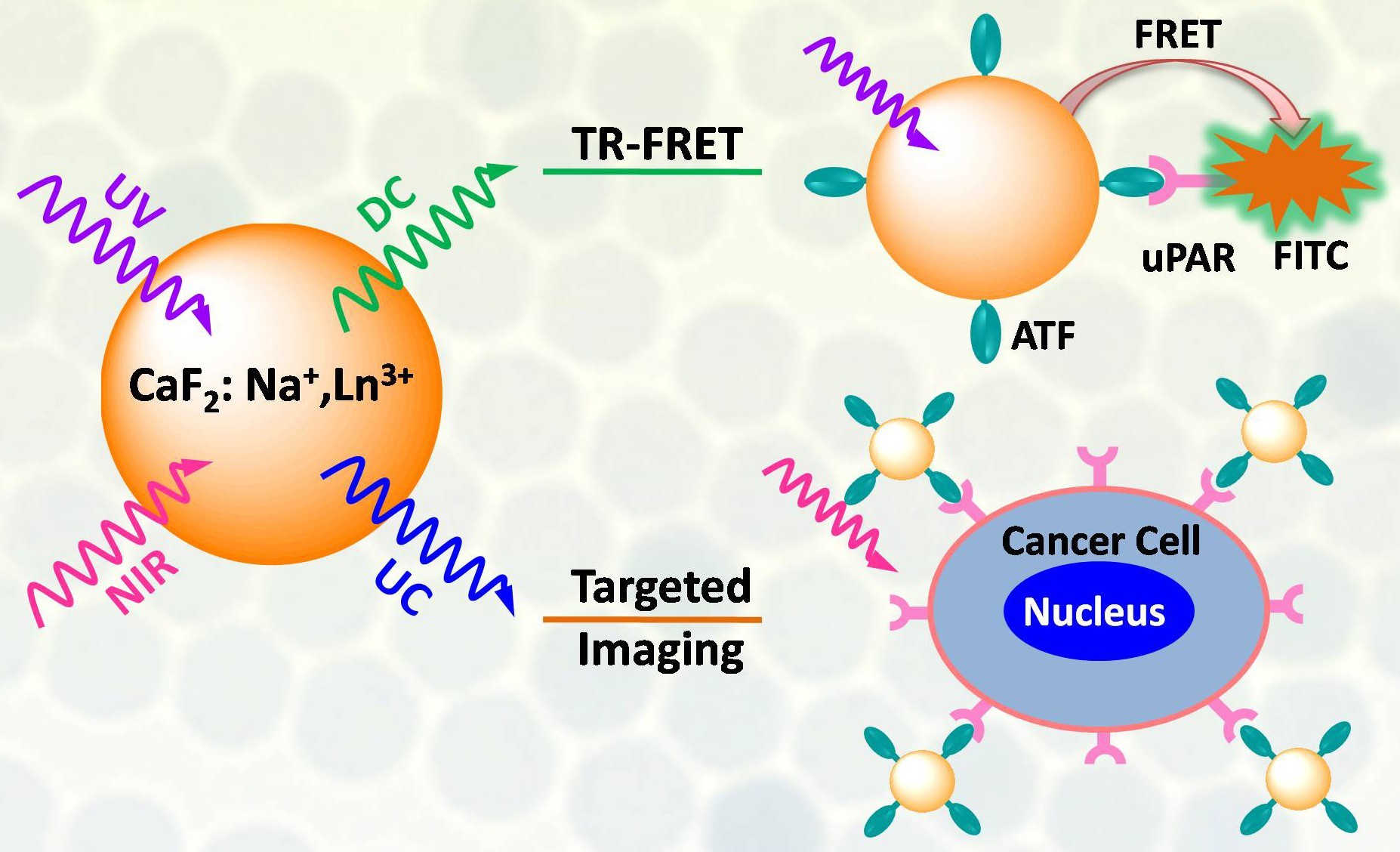
Ultrasmall Ln3+-doped CaF2 nanoprobes for TR-FRET detection of tumor marker suPAR and targeted cancer cell imaging (Image by Prof. CHEN Xueyuan’s group)
In view of the significant research results aforementioned, Prof. CHEN’s group has recently been invited to write a critical review article entitled “Lanthanide-Doped Luminescent Nanoprobes: Controlled Synthesis, Optical Spectroscopy, and Bioapplications” (Chem. Soc. Rev., 2013, 42, 6924). This review is aimed at providing a comprehensive review of the latest advances made in developing lanthanide-doped luminescent inorganic NPs as potential bioprobes, which not only provides a useful guide to both the beginners and advanced researchers but also keenly advises the most important emerging trends and future efforts towards this active research field.
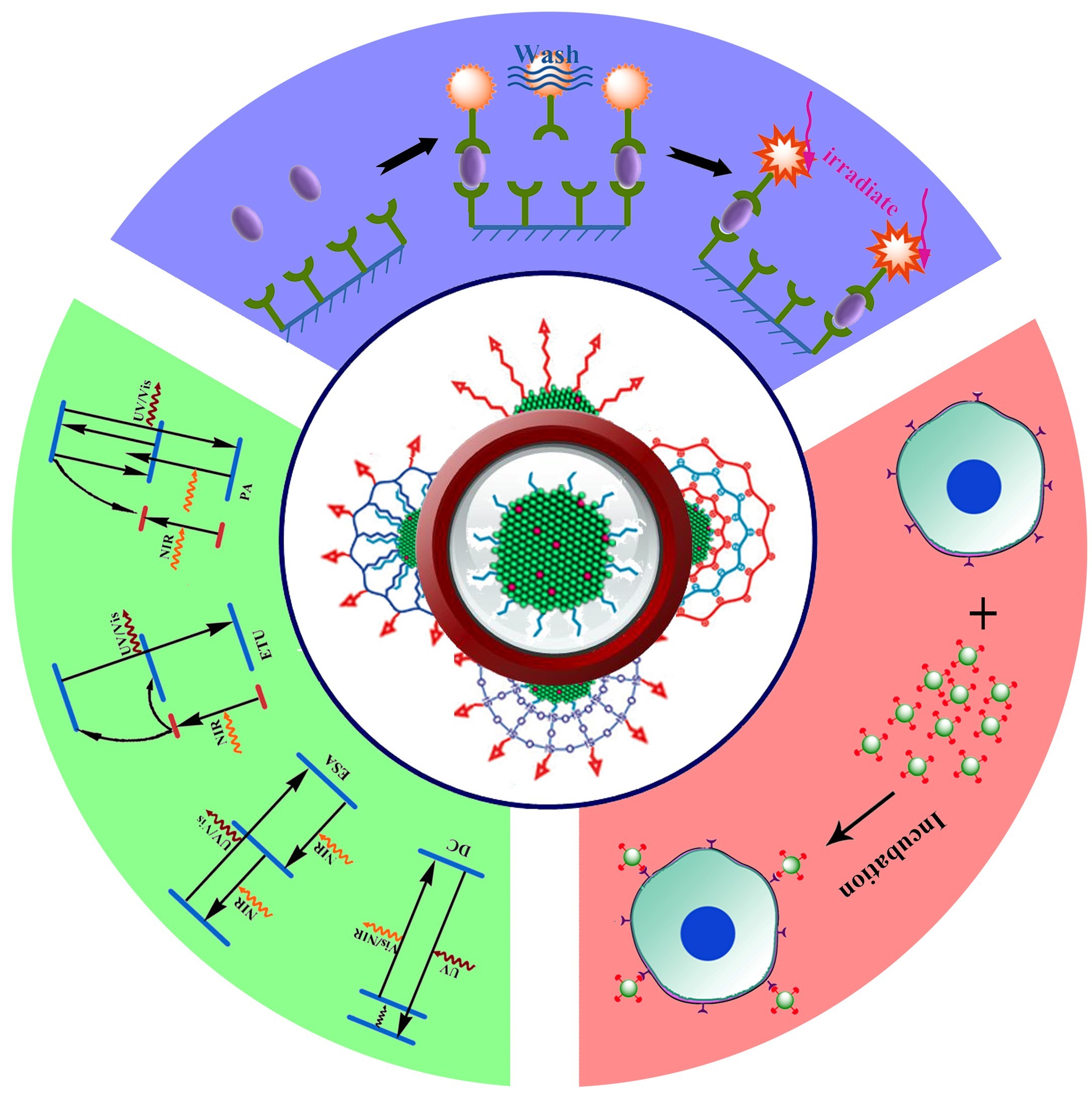
Ln3+-Doped Nano-Bioprobes: Controlled Synthesis, Optical Properties and Bioapplications (Image by Prof. CHEN Xueyuan’s group)
Contact:
Prof. CHEN Xueyuan
Fujian Institute of Research on the Structure of Matter
Chinese Academy of Sciences
Email: xchen@fjirsm.ac.cn
